Dynamic composting system for organic waste
Description
To handle organic waste recycling efficiently, facility operators rely on specialized, full-cycle machinery engineered to process raw inputs, manage composting, grind materials, and produce high-grade organic fertilizer.
This machinery handles diverse organic matter—including cattle manure, swine waste, poultry litter, agricultural residues, straw, and sewage sludge. By deploying heavy-duty, professional-grade equipment, operators dramatically accelerate the fermentation cycle, elevate final compost quality, and minimize manual labor overhead.

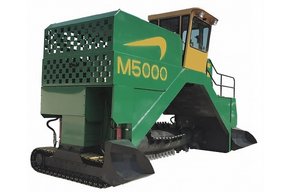
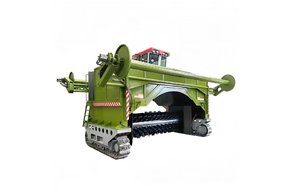
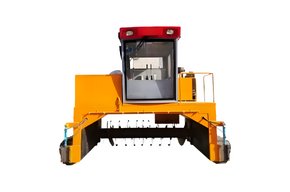
1. Crawler Compost Turner / Moving type compost turner
Purpose: Designed for large-scale production of bio-organic fertilizers in tunnels, providing efficient aeration and mixing of compost windrows.
Performance: Accelerates the fermentation (windrowing) process of shredded organic waste, ensuring high operational efficiency.
Technical Features:
- Hydraulic Drive: Ensures smooth movement and precise control of the working elements.
- Tracked Chassis (Crawler Tracks): Guarantees excellent off-road capability and stability on soft, wet, or uneven surfaces of composting pads, while exerting lower ground pressure.
- Processable Raw Materials: Ideal for processing a wide range of materials, including livestock manure and poultry litter, agricultural waste (straw, haulm), sewage sludge, and industrial organic by-products.
- Application: Ideal for large agricultural enterprises, fertilizer production plants, and municipal organic waste processing facilities.
Technical Specifications:
- Composting Width: 4.5 m
- Maximum Composting Height: 2.2 m
- Power: 160 kW, Euro IV emissions standard
- Diesel Engine Brand: Cummins
- Capacity/Output: 3,000 m³/h
- Compost Rotor (Drum) Diameter: 1.2 m
- Dimensions (L x W x H): 5.17 x 4.0 x 4.6 m
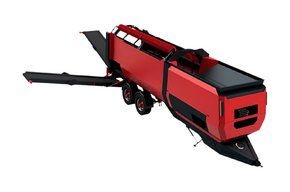
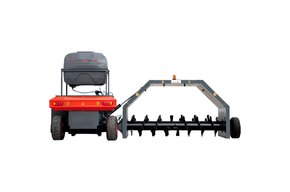
2. Mobile Trommel Screen / Separator MTS
Drum Compost Turner/Screener is high-capacity industrial equipment designed to automate organic waste processing, fraction separation, and windrow aeration in tunnel and large-scale composting operations. This technology ensures intensive conversion of waste into high-quality bio-organic fertilizer.
Purpose: Large-scale production of compost and bio-fertilizers from various organic wastes: livestock manure (cattle, poultry), sewage sludge, agricultural residues, and industrial by-products.
Composting Method: Operates effectively in open and covered windrows (windrow system), forming high trapezoidal windrows (up to 3.2 m in height).
Mobility: Self-propelled design capable of straddling or moving along compost rows, typically equipped with a tracked (crawler) or wheeled chassis.
Technology Advantages:
- High Output: Self-propelled machines process between 300 to 1,500 m³/h (or tons/h) of compost.
- Superior Fertilizer Quality: Rotor blades/drums thoroughly shred, mix, and aerate (oxygenate) raw materials, accelerating the fermentation process.
- Space Optimization: Ability to form tall, dense windrows minimizes the required footprint for the composting pad.
- Versatility: Drum mechanisms excel at handling wet, sticky materials that are difficult to screen using conventional methods.
- Automation: Single-operator control for driving, turning, and shredding operations.
Technical Specifications:
- Screening Drum Diameter: 1.8 m
- Screening Drum Length: 4.7 m
- Feed Hopper Capacity: 3.0 m³
- Effective Screening Area: ~22.1 m²
- Overall Dimensions (L x W x H): 10.9 x 2.5 x 3.9 m
Technical Specifications:
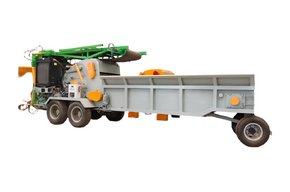
- Infeed Conveyor (mm): 4,000 × 1,300 (chain type).
- Discharge Conveyor (mm): 1,000 × 10,000 (hydraulic folding).
- Cutting Rotor (Drum) Diameter (mm): 900.
- Feed Opening Dimensions (mm): 1,300 × 500.
- Number of Blades: 18 pcs.
- Blade Material: German HARDOX 600 steel + tungsten carbide coating.
- Rotor Speed: 900 RPM.
- Infeed Height (mm): 500.
- Feed Speed: 0–20 m/min (variable frequency speed adjustment).
- Output Particle Size (mm): 90% < 100.
- Capacity/Throughput: 10–15 t/h (depends on raw material type).
- Main Engine Power: 340 hp (diesel engine).
- Overall Dimensions (mm): 9,000 × 2,600 × 2,600 (L × W × H).
- Tire Model/Size: 10.00-20 (4 tires) | 8.50-16 (2 tires).
- Control System: Full-function control panel.
- Remote Control: Operating range up to 80 meters.
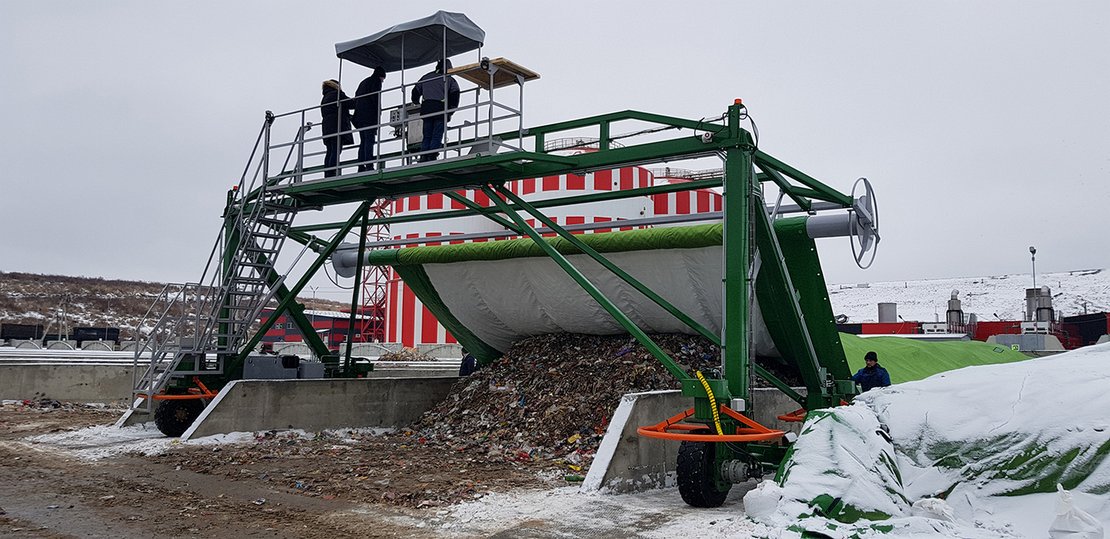
By covering the compost collar (shaft) with a film or other materials in the tunnels, the temperature and humidity during fermentation are guaranteed to contribute to the decomposition and fermentation of organic substances. Especially in cold conditions, composting systems effectively increase the stability and efficiency of compost.

Key Benefits & Problem Solving:
- Odour Control & Regulatory Compliance: Eliminates foul odours and improves compliance with environmental and community standards.
- Accelerated Fermentation & Higher Throughput: Accelerates the fermentation process and increases overall processing capacity.
- Optimal Process Conditions: The system maintains uniform temperature (>55°C), moisture (50–60%), and oxygen levels (10–15%) throughout the windrow. This creates ideal conditions for thermophilic microbes, shortening primary fermentation to just 3–4 weeks and significantly boosting annual treatment capacity.
- Process Optimization with Minimal Labour: Streamlines operations with minimal manual labour required.
- Weather Protection & Resource Efficiency: Shields materials from harsh weather and conserves resources.
- Consistent, High-Quality End Product: Delivers a higher quality, more stable final compost product.
Equipment Features:
- High Efficiency & Coverage: The film winding/unwinding machine covers widths up to 10 metres, ensuring rapid and high-quality tarping of compost windrows.
- Environmental Protection: Covering windrows with membrane film prevents moisture loss, protects against extreme weather, and enhances overall fermentation efficiency.
- Intelligent Control System: Features an automated control system allowing operators to manage membrane rolling operations directly from the site/platform.
- Heavy-Duty Construction: Built from high-strength carbon steel offering excellent corrosion resistance and an extended service life.
- Safe & Precise Operation: Simple and precise control interface, equipped with emergency stop buttons and comprehensive safety features.

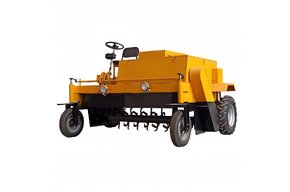
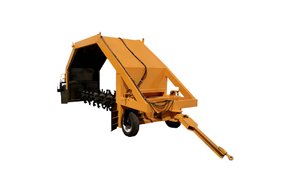
5. GK3000 Mounted compost turner / Tractor-pulled compost turner
Advantages:
- Accelerated Composting: Increases composting speed by enhancing aeration and boosting microbial activity.
- High Mobility & Ease of Use: Easily hitches, detaches, and transports between different composting sites.
- Versatility: Suitable for a wide range of organic waste, including manure, agricultural residues, and municipal waste.
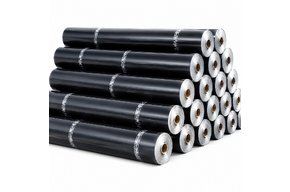
6. Geomembrane
The semi-permeable membrane forms a protective barrier over the compost pile, trapping unpleasant odors, ammonia, H₂S, and volatile organic compounds while allowing water vapor to escape. It protects the compost from rain and snow, retains heat and optimal moisture levels, and ensures a stable, controlled composting process throughout the year.